1. Food Industry: Flavor Shaper and Subject of Debate
In the food sector, phosphoric acid (food-grade) plays a dual role. It is one of the most important acidity regulators, providing the iconic, sharp, and refreshing tartness to colas and other carbonated beverages—a taste profile difficult to replicate fully with organic acids like citric acid. It is also used in products like jams and candies to adjust pH, enhance flavor, and offer some preservative function. Phosphate additives are even more common, serving as moisture retainers, leavening agents, stabilizers, and nutritional fortifiers (e.g., for calcium and iron) in a wide range of meat products, baked goods, and dairy products.
However, its use comes with health controversies. Beverages containing phosphoric acid, especially when consumed frequently, are believed to potentially promote tooth enamel erosion due to their acidity. Of greater concern is that excessive phosphorus intake (primarily from phosphate food additives) may disrupt the body’s calcium-phosphorus balance. For individuals with impaired kidney function or a history of kidney stones, this may increase the risk of renal calculi formation and negatively impact bone health. This necessitates that the food industry continuously seeks a balance between achieving processing objectives and safeguarding public health.
2. Agriculture and Animal Husbandry: The Cornerstone of Life Nutrients
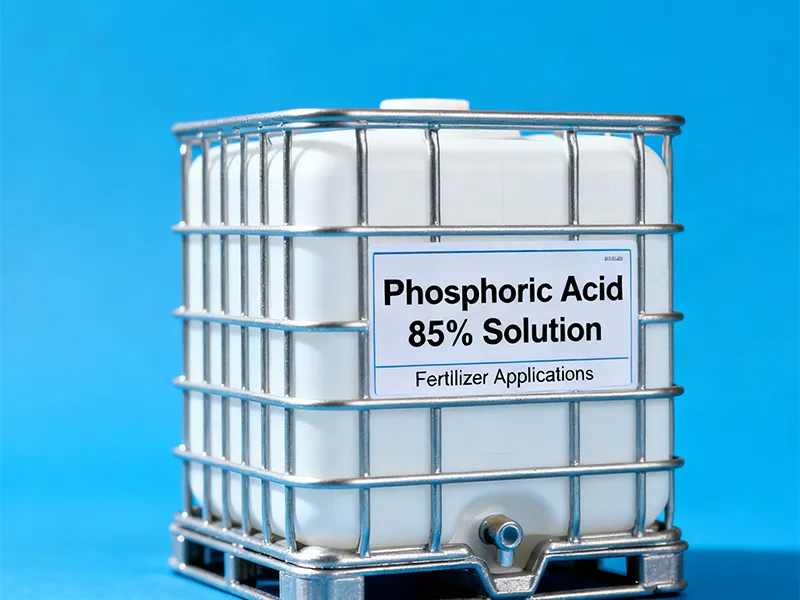
Agriculture is one of the largest sectors of phosphoric acid consumption. It is a core raw material for manufacturing almost all phosphate fertilizers, such as superphosphate and mono-potassium phosphate (MKP). Phosphorus is an indispensable “element of life” for plant growth, involved in critical processes like energy transfer, photosynthesis, and genetic information transmission, directly impacting crop yield and quality.
In animal husbandry, phosphoric acid derivatives are equally vital. Feed-grade dicalcium phosphate, monocalcium phosphate, and others are standard mineral supplements in animal feed. They provide the phosphorus and calcium necessary for livestock and poultry to build bones and teeth, participate in metabolism, and support overall growth, development, reproductive capacity, and health.
3. Industrial Manufacturing: From Metal Treatment to Fine Chemicals
Phosphoric acid is a versatile workhorse in industry:
Metal Treatment: Utilizing its acidity in a “phosphating” process, it forms a dense, protective phosphate coating on the surface of metals like steel. This layer effectively prevents corrosion and serves as an excellent substrate for painting, enhancing paint adhesion.
Chemical Polishing: Mixed with oxidizers like nitric acid, it can be used for chemical polishing of metals such as aluminum, copper, and stainless steel, achieving a mirror-like surface finish.
Chemical Raw Material: It serves as a foundational material for synthesizing numerous fine chemicals, including high-efficiency water treatment agents, flame retardants (e.g., various organophosphorus flame retardants), and certain types of surfactants and detergent builders.
4. Pharmaceutical Industry: Regulator of Life Processes
In the pharmaceutical field, the role of phosphoric acid shifts to the microscopic level of life sciences. It serves as a starting material or intermediate for synthesizing various phosphorus-containing drugs. For example, drugs like sodium glycerophosphate are used to regulate electrolyte balance and provide a phosphorus source for parenteral nutrition. Many vital biomolecules and drugs contain phosphorus. They participate in cellular energy metabolism (e.g., ATP), form the backbone of genetic material (the phosphate-sugar backbone of DNA/RNA), and play crucial roles in regulating nervous system function.
Conclusion
Originating from the simple inorganic compound H₃PO₄, the influence of phosphoric acid radiates into nearly every aspect of national economy and daily life. It is both the food additive that gives cola its distinctive taste and the source of fertilizers safeguarding global food security. It acts as the “protective coat” for metals in factories and serves as an essential carrier of an element vital for life’s metabolism. While enjoying the conveniences of modern life it enables, the scientific understanding, rational use, and management of phosphoric acid and its products—particularly in the realms of food and health—are key issues for achieving a balance between sustainable development and public well-being. Like a chemical hub, it vividly demonstrates how a fundamental industrial raw material deeply integrates into and shapes our material world.