Xanthan gum rarely fails because it is “inactive”; it fails because it was dissolved like a sugar instead of handled like a hydrocolloid. Dump the powder straight into water and the outer layer hydrates into a gel skin that seals off the dry core — you get fish-eyes, inconsistent viscosity and a batch that looks under-dosed even though the weigh-out was exact. Add it to a low-pH drink held warm for weeks and enzymes plus acid slowly chop the backbone until the suspension collapses on shelf. Overdose it in a protein drink and you trade instability for a slick, mouth-coating texture that panels reject. The risk is hydration and shear management, not safety.
What is xanthan gum?(Thickener)
| Item | Detail |
| Name | Xanthan Gum;INS/EU code 415 (E415) |
| CAS / EINECS | 11138-66-2 / 234-394-2 |
| Structure | Anionic heteropolysaccharide from Xanthomonas campestris fermentation; backbone of β-D-glucose with trisaccharide side chains (D-mannose–D-glucuronic acid–D-mannose); typical Mw > 1×10⁶ |
| Commercial form | Usually the sodium salt (potassium/calcium salts also exist) |
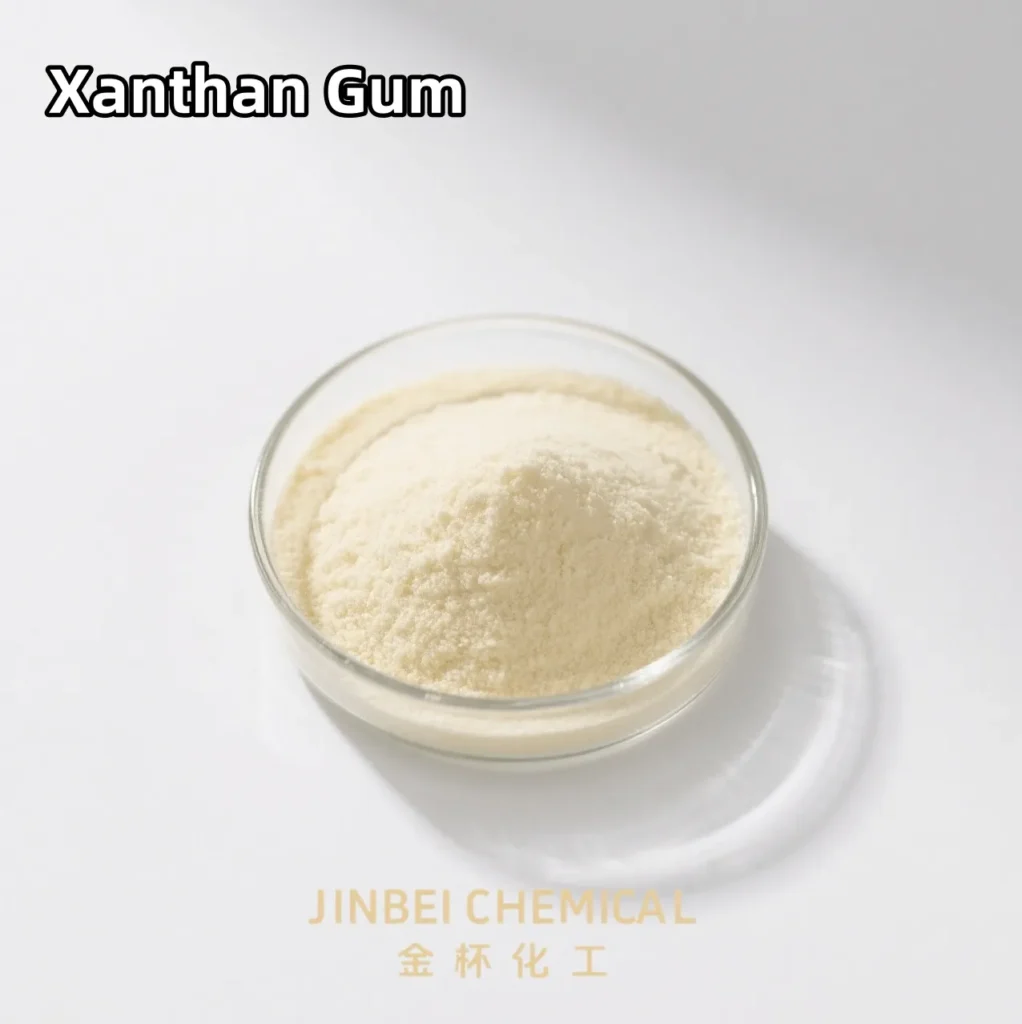
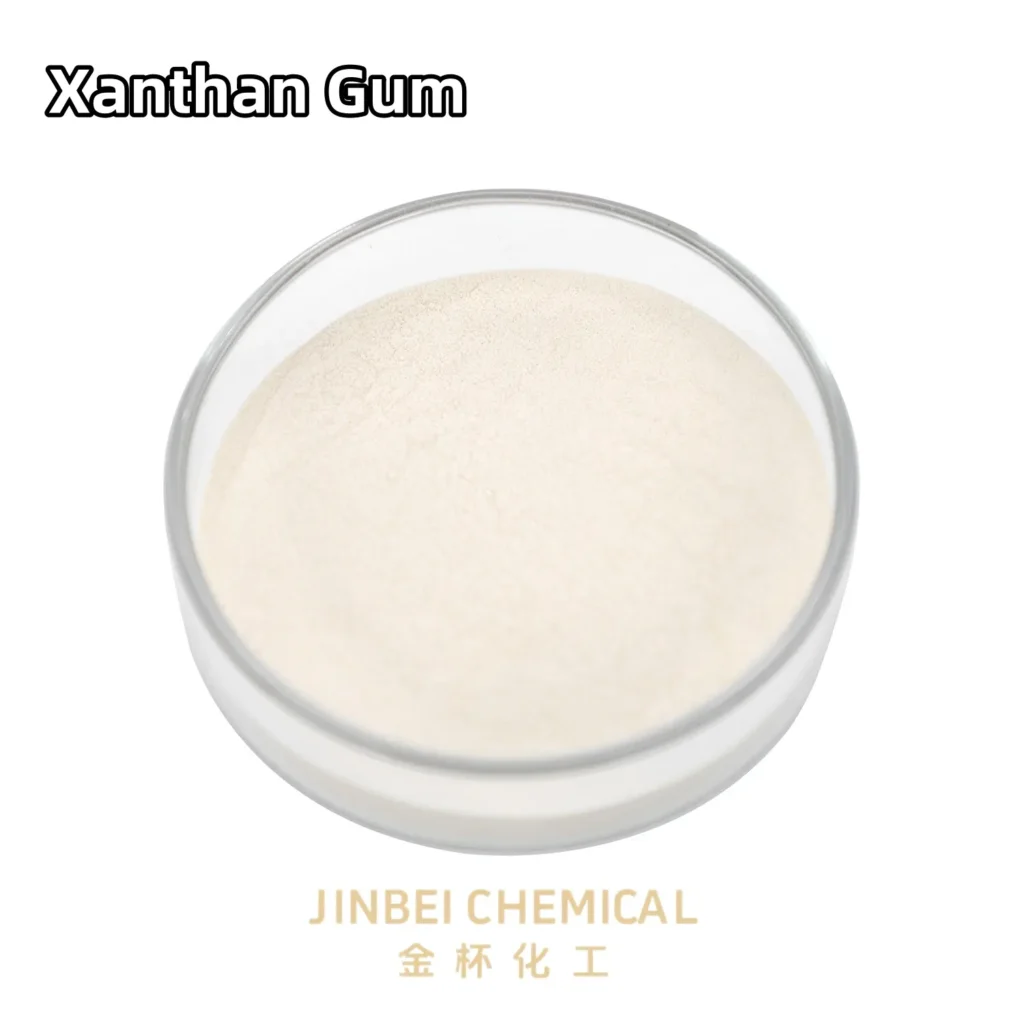
| Appearance | Off-white to light-beige free-flowing powder or granules; slight characteristic odour |
| Solubility | Hydrates in cold or hot water; insoluble in ethanol and most organic solvents |
| Rheology | Strongly pseudoplastic (shear-thinning): high viscosity at rest → thin under shear → recovers instantly. This is the mechanism behind suspension, cling and pourability. |
| Stability window | pH ~3–11; tolerant of high salt; freeze–thaw stable; viscosity largely retained after UHT/retort if pH is not extremely low |
| ADI | JECFA “not specified”; permitted in infant formula up to defined levels |
| China standard | GB 1886.41-2025 (replaces GB 1886.41-2015; effective 2026-03-02); use per GB 2760-2024 as thickener/stabiliser, generally GMP-type |
| US | 21 CFR 172.695 |
| EU | E415; specs in (EU) 231/2012 as amended |
| Related products | Locust bean gum, guar gum, carrageenan, pectin, CMC, konjac gum, gellan, modified starches, compound stabiliser blends |
Two naming traps. First, xanthan gum ≠ xanthan gum “solution”/liquid concentrate: liquid forms are pre-hydrated slurries with their own microbial shelf life — do not substitute one for the other by weight. Second, mesh matters more than buyers expect: 80 mesh and 200 mesh of the same grade hydrate at different speeds and behave differently in high-speed dosing systems. Specify particle size on the PO, not just viscosity.
The spec sheet: the numbers that actually predict performance
Per GB 1886.41-2025 (food additive grade):
| Item | Limit | Why it matters |
| Xanthan gum content (dry basis) | 72.0–108.0 % | New in the 2025 revision — the first real “purity” gate |
| Viscosity (1% in 1% KCl, 24–25 °C, Brookfield LVF No.3, 60 rpm) | ≥600 cP | Functional potency; commercial lots typically run 1,200–1,800 cP |
| Shear performance value | ≥6.5 | Proxy for pseudoplasticity/suspension capability |
| Pyruvic acid | ≥1.5 % | Side-chain marker — higher ≈ better suspension & emulsion stability at lower dose |
| Total nitrogen | ≤1.5 % | Protein/biomass carryover from fermentation |
| Loss on drying | ≤15.0 % | Affects dose-by-weight accuracy and caking |
| Ash | ≤16.0 % | Salt carryover from neutralisation/precipitation |
| Isopropyl alcohol (if IPA used for precipitation) | ≤500 mg/kg | Solvent residual — odour/taste relevant in water & dairy |
| Lead (Pb) | ≤2.0 mg/kg | Food-safety gate |
| Arsenic (as As) | ≤3.0 mg/kg | Added in the 2025 revision |
| Microbiology | Total ≤5,000 CFU/g; coliforms ≤3.0 MPN/g; moulds+yeast ≤500 CFU/g; Salmonella not detected/25 g | Critical — xanthan is itself a fermentable carbon source |
US-specific gates worth holding if you export: residual isopropyl alcohol ≤750 ppm, and the viscosity ratio 75 °F/150 °F must fall between 1.02 and 1.45, plus a positive locust-bean-gum gel identification test. That ratio is a neat authenticity check — a supplier who cannot report it is probably not testing to 21 CFR 172.695.
Three things to hold on every lot: viscosity measured at your stated conditions (not “assay”), pyruvic acid, and microbiology. A COA that only says “viscosity: compliant” without rotor/speed/temperature is not a usable document.
Five failure modes (and which number predicts each)
1. Fish-eyes, lumps and “under-viscous” batches. Classic hydration error, not a bad lot. Dry powder hitting water forms an impermeable gel layer that traps a dry core. Fix: disperse the gum into a dry blend (sugar/salt/maltodextrin at ≥5:1) before adding, or into a flowing vortex, or pre-slurry in oil/glycerol; use an instant/dispersion grade for high-speed lines; and standardise mixing time and temperature. Then verify by measuring viscosity at a fixed time after make-up — viscosity continues to rise for 30–60 minutes as hydration completes, so timing the test is part of the method.
2. Viscosity loss on shelf (the beverage that thins out by month three). Two mechanisms. Acid hydrolysis at low pH accelerates with temperature; and residual enzymatic activity (from incomplete enzyme inactivation during manufacture) cleaves the backbone over time. Predict it with a real-time or accelerated hold test at the product’s actual pH and warehouse temperature, not with a day-one viscosity check. Mitigate: buy from a manufacturer that validates enzyme inactivation, target pH ≥3.5 where flavour allows, minimise heat history, and avoid sourcing on viscosity alone.
3. Slimy/stringy mouthfeel or “ropy” defects. Almost always overdose or the wrong mesh/hydration profile for the matrix. In plain water, flavoured water and clear dairy drinks there is nowhere for excess polymer to hide. Fix: reduce dose in 0.01–0.02% steps, switch to a higher-pyruvate grade so you can use less for the same suspension, and check whether part of the body should come from a cleaner-tasting partner (e.g. a microcrystalline cellulose blend or pectin) rather than more xanthan.
4. Microbial spoilage in the finished product. Xanthan is a polysaccharide carbon source; a marginal preservative system plus a contaminated dosing scoop or a wet hopper can seed growth. And conversely, the gum’s own total plate count matters most in low-water-activity or minimally preserved products (dry blends, infant-adjacent categories, clean-label programmes). Fix: hold the COA microbiology limits tightly, keep dosing equipment dry and cleaned, and never return scooped-back fines to the bag.
5. Weak gel / syneresis when paired with LBG or konjac. Xanthan’s synergy with locust bean gum and konjac mannans is powerful but finicky: the wrong ratio gives a brittle, weeping gel instead of a smooth elastic one. This is a formulation problem, not a raw-material defect. Fix: run a ratio matrix (e.g. xanthan:LBG from 90:10 to 50:50) at your actual solids and pH, and lock the winning ratio as a raw-material spec, not a lab curiosity.
Choosing grade and mesh by application
| Application | Typical dose | Grade/mesh guidance | Role |
| Protein drinks, plant-protein RTD | 0.05–0.15% | Standard or instant, mid-high pyruvate | Suspend protein, prevent sedimentation & ring, stabilise through shelf life |
| Juice/nectar with pulp | 0.05–0.15% | Instant/dispersion grade | Pulp suspension without heavy mouthfeel |
| Still & flavoured water | 0.02–0.08% | Fine mesh (200), low odour, tight micro | Body at minimal dose — most demanding matrix for taste |
| Dairy, yoghurt drinks, fermented | 0.05–0.20% | Standard; confirm enzyme inactivation | Mouthfeel, prevent wheying-off; check compatibility with cultures |
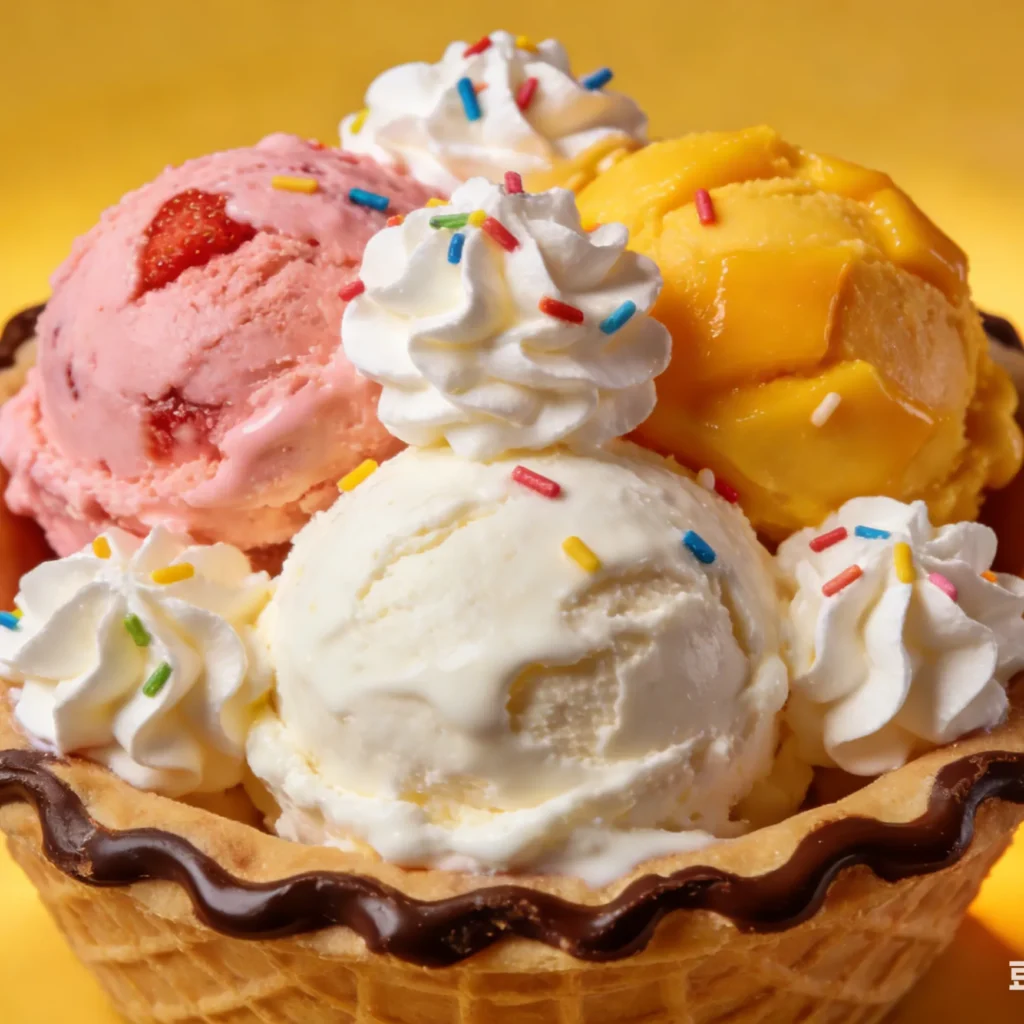
| Ice cream & frozen desserts | 0.02–0.15% | Often blended with guar/carrageenan | Control ice crystal growth, improve melt resistance, reduce shrinkage |
| Sauces, dressings, ketchup | 0.05–0.30% | Standard; synergy with starch | Shear-thinning pour + cling, freeze–thaw stability, emulsion support |
| Bakery & gluten-free baking | 0.1–1.0% (higher in GF) | Standard or fine mesh | Water binding, crumb softness, gas-cell stabilisation, GF structure |
| Confectionery, fillings, jellies | 0.1–0.5% | Blends | Moisture control, syneresis control, bite |
| Meat products, restructured, plant meat | 0.1–0.5% | Standard | Bind water/fat, improve sliceability and yield |
| Beverages needing acid/heat robustness (retort, UHT) | 0.05–0.20% | Confirm post-process viscosity retention | Stable through sterilisation where starches break down |
| Non-food: oil drilling, detergents, cosmetics, toothpaste | Separate grade/spec | Industrial/cosmetic grade | Grade follows use; never cross-use batch numbers |
Ranges are industry-common intervals. Convert to your target viscosity by trial and validate against the target market’s regulations.
How to choose a xanthan gum manufacturer (the checklist buyers actually use)
Xanthan is a fermentation product made at very large scale, and the same plants often supply food, cosmetic and industrial lines. That makes the selection step more consequential than for a simple chemical salt.
- Strain and fermentation control. Ask which X. campestris strain is used and whether it is documented non-pathogenic and non-toxic (a requirement under 21 CFR 172.695). Request evidence that the process removes viable cells.
- Precipitation solvent: ethanol or isopropyl alcohol. This determines which residual-solvent spec applies (ethanol vs IPA ≤500 mg/kg under GB; IPA ≤750 ppm under US rules) and can affect Halal/Kosher documentation. Know which one you are buying and make sure the COA reports it.
- Starch source and allergen/GMO status. Corn is most common; wheat- or cassava-based exist. If you claim non-GMO or need allergen statements, confirm the botanical source and the supporting certificate before ordering.
- Test capability under the new standard. Since GB 1886.41-2025 added xanthan content, isopropyl alcohol and arsenic as formal items, your supplier must be able to report them. Ask whether these are tested in-house or outsourced, and request a sample COA showing all three. A supplier still issuing 2015-format COAs is behind the curve and will slow your audits.
- Batch-to-batch viscosity consistency. More valuable than a single high number. Ask for the last 6–12 lots’ viscosity data and look at the spread. Wide spread = you will be reformulating every quarter.
- Particle size and dust control. 80 mesh vs 200 mesh vs instant; specify and verify by sieve analysis. For automated dosing, also ask about bulk density and angle of repose — these determine whether your feeder bridges.
- Microbiology programme. Xanthan’s main quality risk is microbial. Ask about the kill/drying step, environmental monitoring, and whether they can meet tighter limits (e.g. total count ≤2,000 CFU/g) for sensitive categories.
- Certificates and capacity. Halal/Kosher/non-GMO/allergen statements confirmed before ordering; annual capacity, lead times, and whether food-grade lines are physically segregated from industrial ones. Keep a second qualified source — fermentation supply can tighten seasonally with corn/starch markets.
- Price sanity check. A quote well below the food-grade market for “high viscosity” material usually means industrial-grade relabelled, or a low-pyruvate lot sold as premium. Verify with a pre-shipment sample, a third-party report, and a bench hydration test.
Storage & handling: cool, dry, sealed; protect from moisture condensation and strong odours; typical shelf life 24 months for the neat powder. Once slurred or pre-hydrated in water, microbial stability must be established for the slurry itself — do not extrapolate from the powder shelf life.
Figures above are indicative ranges from public standards and literature. Confirm final acceptance criteria against the current valid standard text and your batch COA before release.
Compliance & labelling points that trip people up
- In China, xanthan gum is a food additive (thickener/stabiliser), produced under an SC licence; GB 1886.41-2025 has been in force since 2026-03-02 and supersedes the 2015 version. Downstream buyers must update their IQC specs accordingly — xanthan content, residual IPA and arsenic become new acceptance items.
- Under GB 2760-2024 it may generally be used (GMP-type) across most categories — unlike sucralose, which is category-limited. But “GMP-type” is not a licence to overdose: sensory and texture limits will bite long before regulatory ones.
- Labelling: declare as xanthan gum (E415 in EU). It counts as fibre in some jurisdictions’ nutrition calculations — check local rules if you intend to make a fibre claim.
- Sodium: most food-grade xanthan is the sodium salt and contributes a small amount of sodium. Where claim maths are tight, ask for the actual Na% on the COA rather than assuming zero.
- Infant formula and FSMP have separate maximum-use constraints in several markets (JECFA evaluated up to 1,000 mg/L). Do not port a beverage formula into infant categories without a regulatory review.
- EU watch item: in 2026 the EU amended (EU) 231/2012 for several hydrocolloids including E415, tightening toxic-element limits, setting maxima for aluminium and protein, harmonising microbiological criteria, and requiring that residual enzyme activity be removed/inactivated during manufacture. If you export to the EU, confirm your lot meets the amended spec and that your supplier has an enzyme-inactivation step.
- Allergen/PKU: inherently free of PKU concerns; allergen status depends on the starch source.
FAQ
Q1: Why does my xanthan lump every time? Is the powder defective?
Almost never. It is a hydration problem. Pre-disperse into a dry carrier (sugar/salt/maltodextrin at 5:1 or more), add into a vortex, or switch to an instant/dispersion grade. Then measure viscosity at a fixed time after make-up — viscosity keeps rising for up to an hour.
Q2: Can I replace guar gum or CMC entirely with xanthan?
Sometimes, but the texture changes. Xanthan gives shear-thinning suspension and acid/heat/salt tolerance; guar gives body and cost efficiency; CMC gives clean mouthfeel in neutral dairy. Blends usually outperform single gums on both cost and texture. Tell us your target viscosity and pH and we will suggest a ratio.
Q3: My RTD drink is stable at launch and sediments at month four. Is it the gum?
Possibly — but check pH drift, preservative efficacy and storage temperature first. Then run a hold test comparing your current lot against a higher-pyruvate grade. If the higher-pyruvate lot holds while the original thins, you have your answer.
Q4: Does it work in gluten-free baking?
Yes — this is one of its best uses. At 0.3–1.0% it provides the viscoelastic network that gluten would otherwise supply, improving gas retention and crumb structure. Combine with adequate hydration and a hydrocolloid blend for best results.
Q5: Does it need to be food grade?
Yes, for any food, beverage, pharma or feed-for-food-chain use. Industrial-grade xanthan (for drilling fluids, detergents, etc.) is priced lower and may carry higher ash, solvent residue and microbial counts, and lacks the SC licence chain. See our guide on why industrial and food grades must not be substituted.
Q6: Are you a manufacturer?
We supply food grade xanthan gum (E415) with per-batch COA covering viscosity (with rotor/speed/temperature stated), pyruvic acid, xanthan content, isopropyl alcohol, arsenic, lead, total nitrogen and microbiology; SC qualification and third-party reports; 80 mesh / 200 mesh / instant dispersion grades; 25 kg bags and bulk; Halal/Kosher/non-GMO on request. We also quote custom compound stabiliser blends for beverage, dairy, sauce and bakery lines. Request a Quote → /contact
Need specs, samples or a quote?
Contact us for the specification sheet, per-batch COA and samples of food grade xanthan gum (E415) — including mesh selection, pyruvate level, instant vs standard grades and custom blends matched to your line.
For formulation support across our range, see also: Liquid Glucose: DE Selection and Failure Modes (body and crystallisation control), Sucralose: Potency, Heat Stability and Dosage, Isomaltulose Stability & Dosage Guide (low-GI beverages and bakery), Isomalt for Sugar-Free Hard Candy (ST-M/ST-F/ST-PF), and Food Grade Sodium Bicarbonate: Specifications and Dosage (leavening and pH control).